MotionVision™
Understanding Spine Movement and Biomechanics With AI
MotionVision™ analyzes spinal movement and biomechanical patterns to provide insights into how the spine functions under real-world conditions.
This helps clinicians better understand structural changes, instability, and patient-specific biomechanics.
How MotionVision™ Works
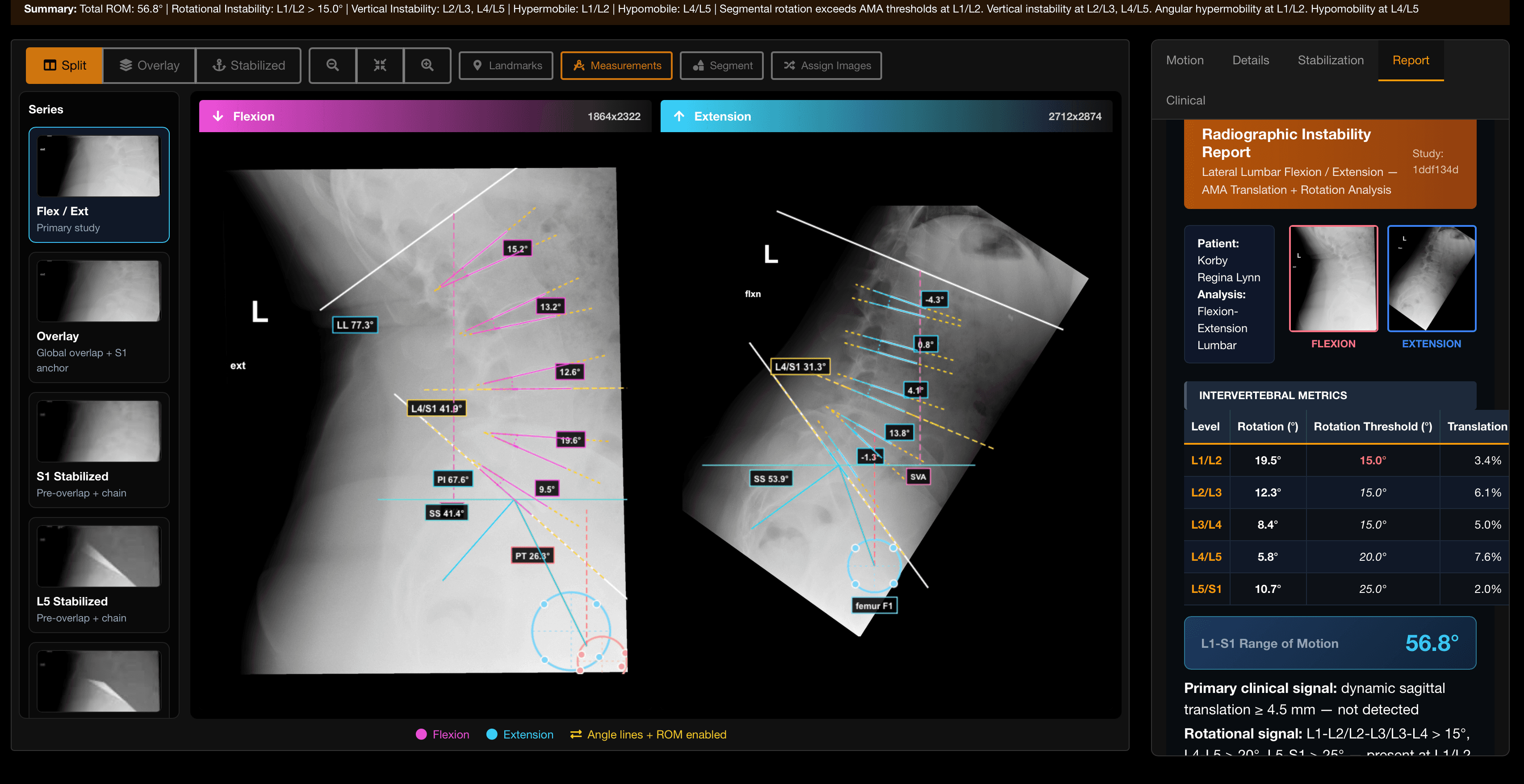
MotionVision™ evaluates motion-related imaging data and identifies patterns that may indicate biomechanical issues or spinal instability.
These insights support better diagnosis, treatment planning, and patient monitoring.
Flexion-Extension Analysis
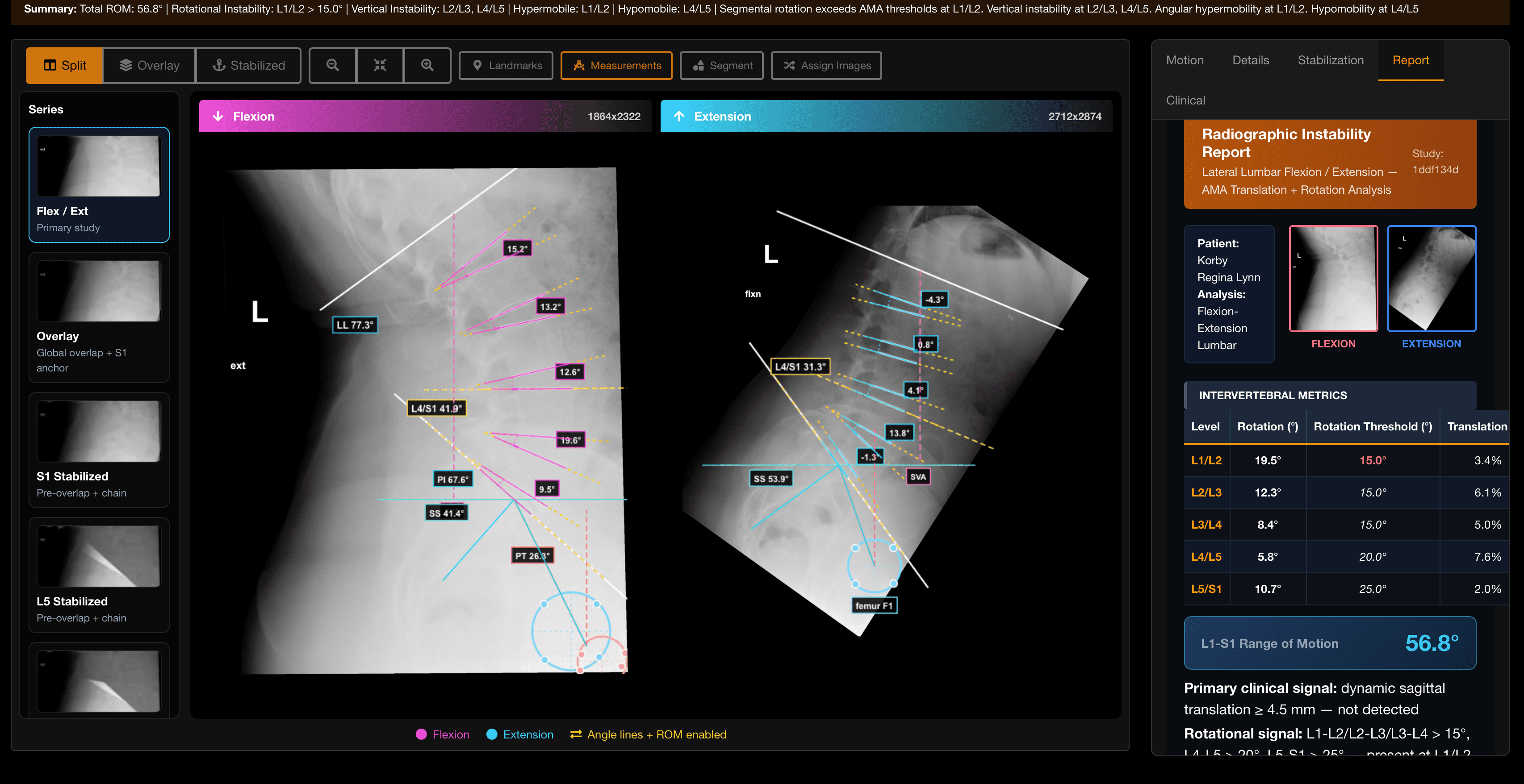
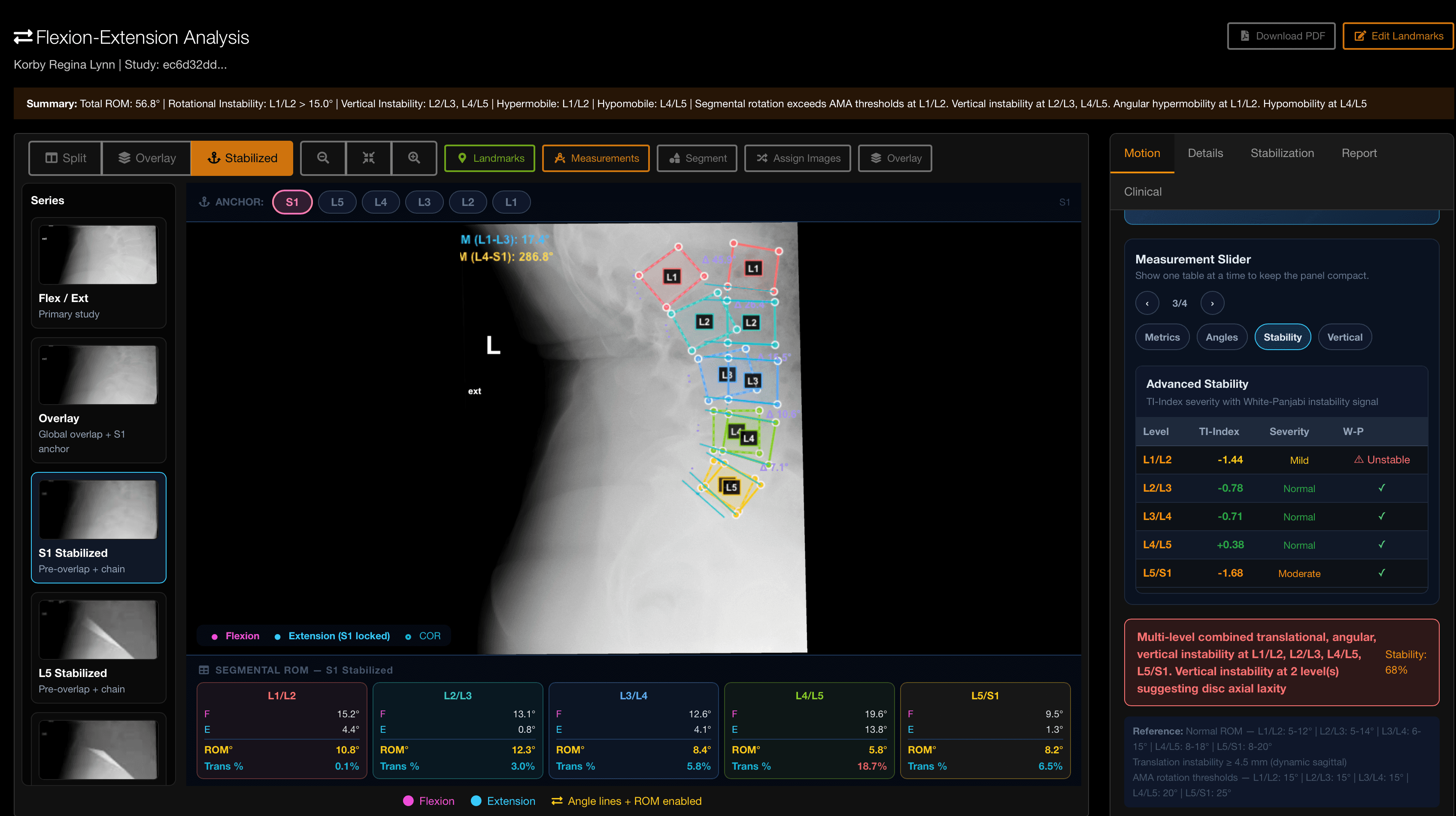
MotionVision starts from a side-by-side flexion / extension comparison, then derives a stabilized overlay so every level's translation, rotation, and instability signal is graded in one view.
Key Capabilities
Spinal motion analysis
Biomechanical insights
AI-driven evaluation
Support for treatment planning
Patient-specific movement insights
Why MotionVision™ Matters
Understanding how the spine moves is critical for diagnosing certain conditions and planning treatments. MotionVision™ helps reveal insights that may not be easily visible in static imaging alone.
Results in: Better understanding of spinal function, improved diagnosis of motion-related issues, enhanced treatment planning, and more personalized care.